


Spotted: The Truth About Dark Spots on Your Face
By: Sophia Mcilwain, e.l.f. Contributor
Ever spot a dark mark in the mirror and think, Wait, when did THAT get here?! Maybe it's a little brown spot on your cheek or a few freckles that seem to have appeared overnight. So… who invited them?
Dark spots on your face are a form of hyperpigmentation, which happens when your skin makes extra melanin (the pigment that gives skin its color). [1] They come in four main types: sun spots, freckles, the flat marks breakouts leave behind and larger patches called melasma.
Some show up after years of stunning in the sunshine, while others have more to do with hormones or breakouts that refuse to leave without a trace. Dark spots are one of the most common skin concerns, and figuring out which type you're dealing with is the first step toward finding your skincare match. Time for a little skin-vestigation!
Types of Dark Spots: Can You Spot the Difference?
Not all dark spots look alike. Some are tiny specks, while others show up as larger patches. Unlike dull skin, which can make your complexion less radiant, dark spots pop up in specific areas and can leave you with an uneven skin tone. Ready to spot the difference? Here's the breakdown:
Sun spots. These flat, tan-to-dark brown spots typically have a round or oval shape with easy-to-see edges. [2] You'll often find them on areas that see the most sunlight, like your face, hands and arms. Also called age spots and liver spots (a name inspired by their color, not your literal liver) [3], dermatologists call them solar lentigines. They typically appear in adulthood after years of sun exposure and can be anything from freckle-sized to much larger. [3, 2]
Freckles. Small, flat and usually tan to light brown, freckles often make their first appearance in childhood. They're more common on lighter skin, especially if you have blond or red hair. [4] Dermatologists call them ephelides, but we'll stick with freckles.
But are dark spots freckles? Sometimes! Freckles are one type of dark spot, though not every dark spot is a freckle. The term can also get used for sun spots, even though they develop differently. [5] The way to tell them apart? The calendar! Freckles tend to darken in summer and fade in winter, while sun spots usually stick around regardless of the season. [2, 4] If a spot appears in adulthood and doesn't fade with the seasons, it may be a sun spot rather than a freckle. [2, 4] When in doubt, a healthcare provider can help you tell the difference.
Post-breakout marks. You know that stubborn spot that sticks around long after a pimple has packed its bags? That's often post-inflammatory hyperpigmentation (PIH), the dermatologist's term for the marks a breakout can leave. These spots can look brown or bluish gray, especially on medium and deeper skin tones, where PIH is more common. [6, 7] Unlike acne scars, they're typically flat, and fading happens naturally over time (but they SURE know how to overstay their welcome). [6]
Melasma. Think larger patches of tan, brown, grayish brown or bluish gray discoloration, often showing up on both sides of your face. Cheeks, forehead, chin and upper lip? All common culprits. Melasma is more common in medium to deep skin tones. [8, 9]
One important skin check: If a spot starts changing, growing, developing irregular edges or looking different from the rest, have a healthcare provider take a look. Not every dark spot is hyperpigmentation. [3]
What causes dark spots on your face?
The sun might be a major suspect, but it's not the only one leaving spots behind. Hormones, breakouts, skin injuries and even certain medications can all play a part. [1] They can each affect how your skin produces melanin, the pigment that gives your skin its color. When extra pigment builds up in one spot? Helloooo hyperpigmentation. [3, 8, 1]
Sun. UV rays can cause sun spots and make freckles more noticeable, especially in summer. [2]
Hormones. Hormonal changes can send melanin production into overdrive, which may be why melasma sometimes makes its debut during pregnancy or after starting birth control. Spots can also become more noticeable around puberty. [8, 1] Hormones really do love making an entrance.
Skin that's been through something. Breakouts, cuts and burns? They've all got a history of leaving receipts. When skin gets inflamed, it can make extra pigment as it heals, leaving discoloration long after the original irritation is gone. [1] These lingering marks are especially common in deeper skin tones, where discoloration can also appear darker. [7]
Visible light. UV rays get all of the attention, but visible light (yep, the kind your eyes can actually see) can contribute to discoloration, too, especially in deeper skin tones. One study found that visible light caused darker, longer-lasting pigmentation in deeper skin than long-wave UVA, while lighter skin showed no change under the same conditions. [10] Visible light can also play a role in melasma. [9] Turns out, UV rays aren't the only ones making an appearance.
Medications. Some medicines, including certain birth control pills and those that make skin more sun-sensitive, can contribute to dark spots.[1] Think yours might be involved? Check with your healthcare provider before changing anything.
Family history. Freckles and melasma can run in families. [4, 9] Looks like your skincare story might have a few family plotlines!
Why do dark spots show up on the cheeks, forehead or around the mouth?
Ever notice dark spots seem to have their favorite hangout spots? Your cheeks, forehead and nose get plenty of face time with sunlight, making them prime real estate for discoloration. [3] Even the angle of your face affects how much UV light reaches different areas. [11] AKA, think about the parts of your face a hat brim shades versus the spots that still catch the sun.
Your nose and the center of your cheeks also tend to be oilier, making them hotspots for large pores and breakouts. So, that spot on your cheek? It might be a breakout's parting gift rather than a sun spot. Yeah, not exactly the souvenir you asked for.
Hormones and breakouts can also get in on the action around your mouth. Melasma often appears above the upper lip and can show up in matching patches across your cheeks, forehead or jawline. [8, 9] And those chin and jawline breakouts? They can leave behind little reminders of their own. So before blaming every dark spot on the sun, remember that your skin has a few other suspects up its sleeve.
The morning step for the look of dark spots
Ready to C your skin in a brighter light? Before we get into the good stuff, a quick skincare reminder: There's more to a formula than one ingredient, so ingredient research alone can't tell you how a finished product will perform or what benefits it will offer. Get to know each product's cosmetic benefits.
With that in mind, let's meet two morning picks from e.l.f. SKIN and see what each can bring to your routine. Your new skincare fave may be one scroll away.
Meet Vitamin C + E + Ferulic Serum
Who it's for: Anyone chasing visibly brighter, more radiant-looking skin and an antioxidant step in their morning routine. Vitamin C newbie or ingredient-list detective? You're in!
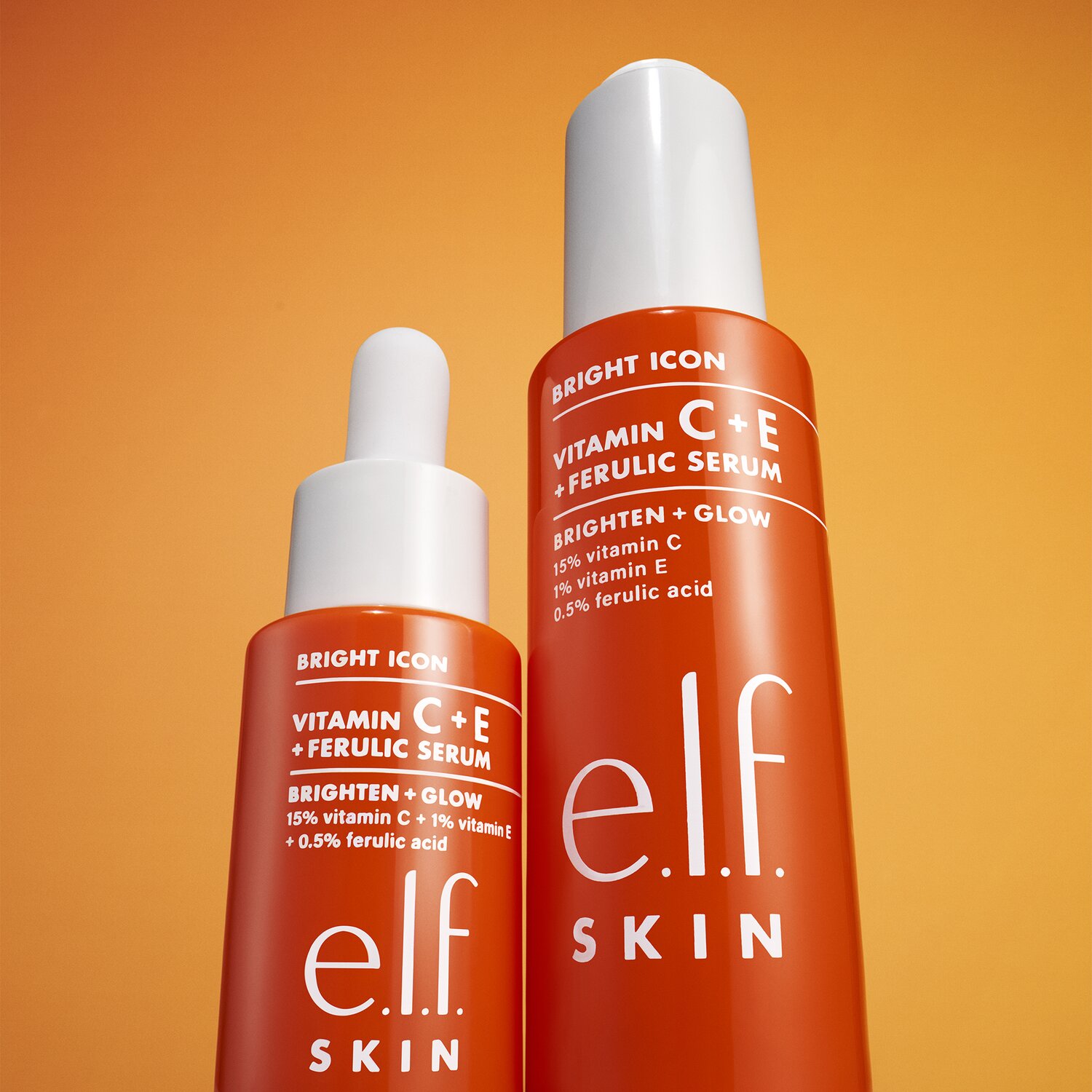
Meet e.l.f. SKIN's Vitamin C + E + Ferulic Serum, bringing a little brightening energy to your morning routine. With 15% vitamin C, 1% vitamin E and 0.5% ferulic acid, this serum helps visibly brighten, even out skin tone and reduce the look of dark spots and fine lines.
The texture? Lightweight and fast-absorbing, so it fits right in with your face moisturizer, SPF and makeup. No heavy feeling here! And with a full-size 1 oz bottle and a 0.5 oz mini, you can take a little brightness wherever your routine takes you.
How to use it
Step 1: First, the Skin Check. New to vitamin C? Give your skin a little introduction! Patch test before going all in, ease it into your routine and stop using it if irritation shows up.
Step 2: Clean Slate. Wash your face with your usual cleanser and gently pat your skin dry.
Step 3: Let Your Serum Shine. Smooth Vitamin C + E + Ferulic Serum over your face and neck until absorbed.
Step 4: Moisture, Please! Follow with your fave moisturizer to keep skin hydrated and nourished.
Step 5: SPF Is a Must. Finish with sunscreen, then add makeup if that's on the agenda.
Step 6: Keep It Cool. Store your Vitamin C + E + Ferulic Serum somewhere cool and dark. That bathroom shelf in direct sunlight? Might be cute for your IG story, but your serum deserves a little shade.
Pro Tip: A little serum goes a long way, so start with a few drops.
Speaking of SPF, e.l.f. SKIN's Suntouchable Whoa Glow SPF 30 is totally ready to join your morning lineup. This lightweight, fragrance-free lotion delivers Broad Spectrum SPF 30 with a radiant finish. Wear it solo or under makeup, apply generously and evenly at least 15 minutes before sun exposure and reapply at least every two hours.
A little vitamin C, your daily SPF and skin that's looking visibly brighter and more radiant? Now that's a morning routine worth getting out of bed for.
Ready for Your Next Skin Win?
Dark spots or not, your skin deserves its main character moment. Maybe you're switching up your morning routine, adding a vitamin C serum to your shelf or simply showing your skin a little extra love. Whatever your next skincare move looks like, make it yours!
Ready to C what all the hype is about? Explore e.l.f. SKIN, find your next holy grail and express your e.l.f. with a routine that's all yours. Because the only thing better than a good skin day? Feeling good in your skin every day.
At e.l.f., we believe in a human-first, human-last approach. This article was drafted with help from AI and reviewed by our team. It reflects information available at the time of publication and may not be updated as new information becomes available. This content is provided for general informational purposes only.